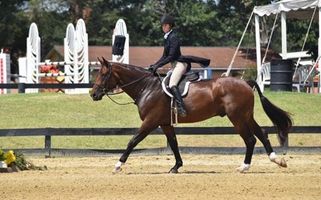
Our Essentials

Tack and Habit Shoppe | Jul 27, 2023

What is your Girth?

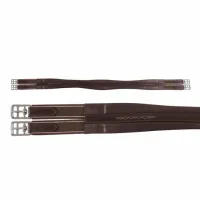
So really now, would I ask you that question referring to your actual girth, as in perhaps your waist measurement? Of course not! I am asking what kind of girth you use on your equine friend. You have a lot of choices about the kind of girth you purchase, so let’s talk about the differences and what you should consider before deciding on the girth you need for your horse or pony. And even before I get started, let me qualify that I am about to discuss English girths (which would be called a cinch if we were talking Western) -- specifically Hunter girths and not Dressage.

The most obvious reason to use a girth in the first place is to keep the saddle on the horse and in its proper place. But really, there is so much more to think about! Comfort of the horse must be considered. While leather is customary, if your horse has sensitive skin you may want to use a fleece girth, fleece cover for a leather girth, or one of the newer products that provide removal/washable parts or special materials to lessen sweating in the girth area. What about shape? There are many shapes to know about, from straight to anatomical girths. And if your horse wears studded shoes, you probably need a stud girth to provide protection to the horse’s belly. Luckily, your trainer probably has a recommendation for you about the type of girth that will give your horse the most comfort and at the same time the best performance. Yet you still want to know the basic differences and things to consider.

But first things first – which is what size (measured in inches) you will need. And remember that, just like you, your horse’s girth size can change over time and can be a warning sign that you horse has gained or lost weight. While you can spend a lot of time and money trying different sizes of girths on your horse, you may want to start by measuring your horse for girth size with the saddle pad and saddle that you will use. Both of those ingredients make a difference, so don’t just grab any saddle pad and saddle. You want the girth to attach in the middle of the saddle billets on both sides, so use a cloth tape measure and stretch it from the middle of one billet to the middle of the other. You will need a friend to do this safely. Measuring this way will give you the size of girth you will need from buckle to buckle. And by the way, while you are measuring, please take the opportunity to carefully inspect both billets. You may have the perfect size and type of girth, but that won’t help keep you and the saddle in place if a billet breaks.

Since we are talking hunter/jumper, that does set some limits on the style of girth and yet there are still a lot of choices.


Hunter Horse Girth Types

-Synthetic Girths

-Leather Girths

-Anatomical Girths

-Fabric Girths

-Neoprene Girths

A good leather girth, and perhaps even a good leather anatomical girth if it is what your horse needs, should be a part of your collection of tack. After that requirement, you may well want a synthetic, fabric, or neoprene girth as well. Our experienced staff can help guide your choices, and you should definitely ask your trainer for their girth preferences for your horse. Beyond that, here are a few possibilities for what we’ll call everyday or schooling girths.

Some Reccomendations:

Ovation Dry-Tex Equalizer Girth:  fleece lined for comfort and features Dry-Tex technology to wick moisture. It is a straight girth.

Toklat Passport Girth: contours to the horses body and is fleece- lined. A good, low cost option for sensitive horses and works well for showing or schooling.

Equifit Essential Schooling Girth: has SmartFabric is perfect for everyday use and is machine washable. With a removable liner, it uses moisture wicking fabric woven with antibacterial silver to help guard against microbial growth. The liner is bonded to a neoprene-free, open-cell foam to ensure a comfortable fit. If you prefer a SheepsWool liner which naturally promotes breathability, that type of liner is an option. It is hypoallergenic and naturally water and odor resistant. *Best Seller

And finally, did you think we were talking one saddle, one horse, one girth? Our store manager, exaggerating just a bit (I hope), said she has about 50 girths for her one saddle and one horse. While that many girths is not needed or recommended, more than one girth is almost essential. After all, you will need to wash or clean your girth frequently so at least a spare is recommended. And in hot weather the need for more than two is a probability, especially if you plan to ride daily. Another reason to have more than one girth is that you may want a schooling girth for every day use, and a good leather girth for those important shows.

With that, w

e wish you happy girth hunting! Let us know if we can help!

Let’s create what matters — together.

Tack and Habit Shoppe

More Posts

Caring for Our Horses in February's Virginia WeatherCaring for Our Horses in February's Virginia Weather
Caring for Our Horses in February's Virginia Weather

February can be an especially challenging month for horse owners in Virginia. The weather can be unpredictable, with vastly fluctuating temperatures and the potential for snow and ice. At We write for customers, neighbors, and anyone interested in what we do and how we do it. This is a place to stay connected, learn something new, and get a closer look at what’s happening around our business.

1. Shelter and Bedding

Providing adequate shelter is crucial during the winter months. When the temperature dips into the teens, our horses stay in for the night, and all the barn windows and doors are carefully closed. When the horses are out, our fields have well-constructed run-in sheds that offer protection from wind, rain, and snow. Our barn and shelters are well-ventilated to prevent condensation and moisture buildup, which can lead to respiratory issues.

Additionally, the trainers ensure there is enough bedding in the stalls to provide insulation and comfort. We use at least 4 inches of sawdust shavings evenly spread across our stalls as bedding material, and we make sure to keep it clean and dry to prevent the growth of bacteria or fungi.

2. Water and Hydration

Water is essential for horses' overall health and well-being, even in cold weather. Our trainers have made sure our horses have access to fresh, unfrozen water at all times. When they fear pipes freezing and jeopardizing our supply, the automatic waterers get turned off, and two buckets are hung in every stall. Staff are directed to make sure they are full and checked regularly for ice which must be removed.

Dehydration can be a serious issue in winter as horses may be less inclined to drink when the water is cold. We encourage our horses to drink by offering Gallagher's Water hen we fear their intake is slowing. Some owners add electrolytes via SmartPaks that feeders can easily distribute at feeding time to further encourage regular water intake. 

3. Feeding and Nutrition

In colder temperatures, horses require more calories to maintain their body temperature. Our horses have constant access to hay. The staff hays the fields twice daily, and stalls always have a couple flakes on hand. Hay provides essential fiber and helps generate heat during digestion.

The trainers help owners monitor their horses' body condition and weight regularly to ensure they are receiving adequate nutrition. When horses are constantly wearing blankets, it's harder to notice changes unless you've learned from experience why such close observation is necessary. The trainers are the first to notice if any horse, especially the older ones, start dropping weight quickly. The instructions on our feed cart are regularly updated as needed, and feeding staff are taught to pay careful attention to these instructions. The trainers consult with both our veterinarian and our equine nutritionist to ensure our feeding plan meets the specific needs of our horses.

4. Exercise and Turnout

Regular exercise is important for horses' physical and mental well-being, and our Hunter show horses are athletes who are used to regular work. However, during frigid, icy, or snowy conditions, trainers sometimes limit turnout or make modifications to provide a smaller, safer paddock for exercise. In addition, the trainers are quick to advise clients when they think we should exercise lightly rather than work full force in a freezing environment.


When we do turn our horses out, the staff makes sure the pastures are free from hazards such as ice patches or frozen mud. The trainers regularly ensure that the footing is safe for our horses to move around without slipping or injuring themselves. The gate entrances are often regraded and reinforced. We've all been taught to check hooves EVERY day, especially when ice balls might be lurking. We've been taught to look for "high heels" and listen carefully as our horses walk into the barn. Many of us use Farrier Barrier  to protect hooves from moisture during this muddy season.

5. Blanketing

Blanketing provides additional warmth and protection for horses in extreme cold weather, especially for our show horses who are clipped. I never realized how much the trainers monitor the weather and decide morning and night which "clothes" our horses should wear. Our trainers have developed a colored tagging system for our blankets which one of them personally oversees. Each horse's blankets have been carefully tagged according to their personal needs, and our communication board is updated twice daily with instruction on how we're dressing our horses. I'm amazed at how much organization and thought have gone into this task. Barn staff and owners have been taught to monitor our horses' body temperatures. When blankets are removed, horses are observed for both coldness and overheating. Any ripped blankets are reported in the crew chat, and trainers notify owners immediately regarding any concerns .

We use waterproof blankets to protect horses from rain and snow. We make sure the blankets fit properly and are in good condition to provide maximum insulation. At the end of each season, blankets are packed up and sent out for cleaning, repair, and renewed waterproofing.

By considering the guidelines I've learned from our trainers, you too can ensure the well-being of your horses during the challenging month of February in Virginia. Remember to monitor your horses closely, provide them with appropriate shelter, nutrition, and exercise, and consult with professionals when you have any questions. Oh, and please don't forget to serve up some special Valentine's Day treats to your equine friend! Stay informed and proactive to keep your horses healthy and happy throughout the winter season.

Ringside Etiquette: Parent Version!Ringside Etiquette: Parent Version!
Ringside Etiquette: Parent Version!

I’ve been going to riding lessons and horse shows as a parent since my daughter, now a professional hunt seat equitation instructor/trainer/coach, was in the fourth grade. I really wish someone would have clued me in early on as to what was and what wasn’t appropriate parent behavior at ringside. I had to learn the hard way trying, pretty unsuccessfully, to drag my husband (the adoring father of our daughter) along. Most of it is common sense, but then again that means different things to different people. So here is my cut on the subject learned over 35+ years. 

Be there! While it isn’t always possible, it is always important. Even at lessons you can learn a lot by just observing. And the support you provide, while not always appreciated by teen riders, will be remembered, as long as you stay in that support role and don’t get between your rider and the instructor/trainer/coach. 

Develop a good relationship with the instructor/trainer/coach. They are not all alike and prefer different things at different times. You do pay them so, in the absence of your rider, ask them your questions about progress, about showing, about what they think is helpful and what is not. Giving them permission to answer honestly is helpful to them and to your rider as well as to you. 

Develop good relationships with other parents. When you help to cultivate a positive barn and show atmosphere, the fun is almost unlimited. Lessons, and especially show days, are long (and here my husband would have added boring). For parents who aren’t especially into horses, those parent relationships can be vital. If you are lucky enough to be in a “barn family” where riders are supported by one another and all the parents, you are lucky indeed. Don’t miss out on the fun and the mutual support that good relationships provide to you and especially to your rider. 

Wait for the right time to talk to your rider. Learning to stand back, especially during a lesson or when the instructor/trainer/coach is preparing or debriefing your rider at a show, calls for patience and holding your tongue. It is not even the time to say good job! I’ve been sneered at more than once before I learned the art of waiting. Your intentions are good but waiting at least until lessons or divisions are completed (and even longer depending on the sensitivity of your rider) is definitely best. Even if you know what you are observing, which many of us don’t, let your instructor/trainer/coach handle the corrections and accolades, and take your cue from them. I’ve gotten lots of “Oh Mother” sighs for saying what a good job was done when what I thought was a great ride was not seen in that light by my daughter. As their experience and yours grows, you will know what to say and when, but use caution while learning! 

Learn the role of the groom. Since most of us don’t hire an actual groom, learning the support you can provide in this role is something you can do. Learning to wipe boots, paint hooves, brush the horse or pony, and remove and hold onto that martingale is easy enough and brings you close without interfering. To this day, my daughter loves it when I clean her boots, hold her horse or any of those grooming actions at ringside.** 

Food and drink are important and are things you can provide.  Packing your rider’s favorite nutritious meals, drinks, and snacks is a great way to support your rider. When packing isn’t practical, purchasing and delivering the same thing ringside at the right time is truly appreciated. Timing is everything though. The show day is long and there will be a right time. Ask but don’t pester. 

**More on this later. Look for another blog on the particulars and equipment needed to fulfill this role


Hunter Jumper vs. Show Jumping: Understanding the DistinctionsHunter Jumper vs. Show Jumping: Understanding the Distinctions
Hunter Jumper vs. Show Jumping: Understanding the Distinctions

Are you an equestrian enthusiast looking to delve into the world of competitive jumping? If so, understanding the distinctions between Hunter Jumping (Hunters) and Show Jumping (Jumpers) is essential. While both disciplines involve jumping over obstacles, significant differences set them apart. Here at Stonehouse Stables, we are Hunt Seat Equestrians. Hunters focus on the elegance and precision of the horse's movement, emphasizing style, form, and smoothness. Jumpers, on the other hand, are all about speed and agility, with riders aiming to complete a course of jumps in the fastest time possible. In this article, we will explore the key elements that differentiate these two disciplines which together form the Hunter/Jumper sport. Whether you're a beginner or an experienced rider, gaining a clear understanding of the distinctions between Hunters and Jumpers will not only deepen your appreciation for the sport but also help you choose the right path for your own equestrian journey. So, let's saddle up and explore the world of jumping! 

Hunters: The art of elegance and precision

The Hunter discipline emphasizes elegance and precision. The goal is to create a seamless and harmonious partnership between a horse and rider, showcasing the horse's natural movement and athleticism. In Hunter competitions, the emphasis is placed on style, form, and smoothness rather than speed. Riders are judged on their ability to remain connected while navigating a course over fences with finesse and accuracy. I’ve heard trainers tell Hunters the course should look so natural and easy that spectators watch and believe they could do it.

One of the key distinctions of Hunter jumping involves the way the course is set up. The jumps on Hunter courses are designed to resemble natural obstacles found in the hunt field, such as hedges, stone walls, and wooden fences. This adds to the aesthetic appeal of the discipline, as it creates a picturesque and traditional atmosphere. The jumps are typically lower in height as compared to show jumping, ranging from 2’ at the lowest to 4’ at the highest.

In Hunter competitions, riders are not only judged on their style as they clear the jumps, but also on their horse's movement and overall presentation. According to the United States Hunter Jumper Association (USHJA), "classes are subjectively judged based on the horse's performance opver fences as well as its quality of movement under saddle on the flat."The horse's movement should be relaxed, rhythmic, and flowing, with a long, low frame and a ground-covering stride. The distances between the jumps determine the strides between them, so you might notice parents around the ring counting strides. The rider's position should be balanced and appear effortless, with soft and subtle aids that allow the horse to perform at its best. The overall goal is to create a picture of elegance and grace as the horse and rider navigate the course. 

Show Jumpers: The sport of speed and agility

Show jumping is a faster-paced discipline that tests the speed and agility of both horse and rider. Unlike Hunters, where the emphasis is ideal manners, style, and way of going, Jumpers must complete a clean course in the fastest time possible. Jumper courses are typically higher and more technical than those in the Hunters because riders and horses are not being judged on style. The jumps are measured in meters and can range anywhere in height from 0.80 meters to 1.60 meters. 

Show jumping courses are designed to test the horse's ability to quickly and accurately navigate a series of challenging jumps. The jumps can include combinations, such as double and triple combinations, where the horse must jump a series of obstacles in quick succession. The courses also incorporate tight turns and challenging angles, requiring the horse and rider to have excellent balance, control, and agility.

According to the United States Hunter Jumper Association (USHJA) "Jumper Classes are scored objectively based soley on the horse's athletic ability over fences as measured by time." Riders are judged on their ability to clear 12-16 jumps within the specified time frame. Penalties are given for knocking down rails, refusing jumps, or exceeding the time allowed. The goal is to complete the course with the fewest penalties and in the fastest time possible. Show jumping requires a combination of skill, precision, and bravery, as riders must make quick decisions and adjust their riding technique to each unique course.

Training and techniques for hunter jumper riders.

Training for hunter jumper riders focuses on developing the horse's movement, jumping style, and the rider's position and aids. The overall goal is to create a harmonious and elegant partnership between horse and rider. Here are some key training and techniques used in hunter jumper:


1. Flatwork: Flatwork is a crucial aspect of hunter jumper training. It involves exercises that improve the horse's balance, suppleness, and responsiveness to the rider's aids. Flatwork exercises include circles, transitions, lateral movements, and collection and extension of gaits. By developing a strong foundation in flatwork, the horse becomes more responsive and balanced, leading to better performance over jumps.


2. Gridwork: Gridwork exercises help improve the horse's jumping technique and style. They involve a series of jumps set at specific distances to encourage the horse to find its own balance and rhythm. Gridwork exercises can include trot poles, bounce grids, and combination exercises. These exercises help the horse develop a consistent and rhythmic approach to jumps, improving its jumping form and technique.


3.Coursework: Once the horse and rider have developed a solid foundation in flatwork and gridwork, they progress to coursework. Coursework involves riding a series of jumps in a specific order, simulating competition conditions. The rider must navigate the course with accuracy, rhythm, and style. Coursework helps improve the rider's decision-making, riding technique, and ability to adjust to different types of jumps and courses.


4.Position and effectiveness of aids: In hunter jumper, the rider's position is crucial for maintaining balance and allowing the horse to perform at its best. The rider should have a secure and balanced position, with a straight line from ear to shoulder to hip to heel. The aids should be soft, subtle, and effective, allowing clear communication between horse and rider.

Training for hunter jumper riders requires patience, consistency, and attention to detail. It is essential to work with an experienced trainer who can guide you through the training process and help you and your horse reach your full potential. 


Training and techniques for show jumping riders

Training for show jumping riders focuses on developing speed, accuracy, and quick decision-making. Show jumping requires a combination of skill, precision, and bravery, as riders must navigate challenging courses within a specified time frame. Here are some key training and techniques used in show jumping: 

`1.Flatwork: Like in hunter jumper, flatwork is essential for show jumping riders. It helps improve the horse's balance, suppleness, and responsiveness to the rider's aids. Flatwork exercises include circles, transitions, lateral movements, and collection and extension of gaits. By developing a strong foundation in flatwork, the horse becomes more responsive and balanced, which is crucial for navigating challenging show jumping courses.

2.Gridwork: Gridwork exercises are also beneficial for show jumping riders. They help improve the horse's jumping technique and style, allowing it to tackle technical jumps with ease. Gridwork exercises can include trot poles, bounce grids, and combination exercises. These exercises help the horse develop a consistent and rhythmic approach to jumps, improving its jumping form and technique.

3.Coursework: Show jumping riders must practice riding a variety of courses that simulate competition conditions. This helps develop their ability to make quick and accurate decisions, adjust their riding technique to different types of jumps and courses, and navigate challenging combinations and tight turns. Coursework also helps riders develop a sense of pace and rhythm, allowing them to complete the course within the specified time frame.

4.Quick decision-making: Show jumping requires riders to make split-second decisions on the course. They must assess the best approach to each jump, adjust their riding technique, and make quick adjustments if the horse refuses a jump or knocks down a rail. Show jumping riders must be confident, decisive, and adaptable, as they often encounter unexpected challenges and obstacles on the course.


Training for show jumping riders requires a combination of technical skills, physical fitness, and mental agility. Working with an experienced trainer who can provide guidance and support is crucial for success in show jumping competitions. 


Choosing the right horse for hunter jumper or show jumping

Choosing the right horse for hunter jumper or show jumping is essential for success in either discipline. Trainers are invaluable for helping you navigate any lease or purchase. Your trainer should know your goals and budget to help find the horse for you. Here are some factors you and your trainer will consider when selecting a horse: 

1.Movement: In hunter jumper, the horse's movement is a crucial element. Look for a horse with a relaxed, rhythmic, and flowing stride. The horse should have a long, low frame and a ground-covering stride. In show jumping, the horse's movement should be agile, quick, and responsive, allowing it to navigate challenging courses with ease.

2.Jumping style: The horse's jumping style should also be considered. In hunter jumper, look for a horse with a smooth and rounded jumping technique. The horse should tuck its knees up tightly and have a bascule, or roundness, over the jump. In show jumping, the horse's jumping style should be powerful and quick, allowing it to clear high and technical jumps with ease.

3.Temperament: The horse's temperament is crucial for both hunter jumper and show jumping. Look for a horse that is willing, brave, and trainable. The horse should have a good work ethic and be responsive to the rider's aids. A calm and level-headed temperament is also beneficial for coping with the pressures of competition.

4.Experience: Consider the horse's experience in either discipline. If you're a beginner, look for a horse with experience in lower-level competitions. If you're an experienced rider, you may be able to handle a horse with more experience and potential to compete at higher levels.

Choosing the right horse for hunter jumper or show jumping requires careful consideration and consultation with an experienced trainer. They can help assess the horse's suitability for the discipline and guide you in making an informed decision.

Hunter jumper vs. show jumping: Which discipline is right for you? 

Deciding between hunter jumper and show jumping depends on your goals, preferences, and riding style. Here are some factors to consider when choosing the right discipline for you:

1.Riding style: If you enjoy the elegance of a smooth and precise ride, hunter jumper may be the right discipline for you. If you thrive on the adrenaline of speed and agility, show jumping may be your preferred choice.

2.Goals: Consider your goals as a rider. If you aspire to compete in traditional and picturesque settings, hunter jumper may be the discipline to pursue. If you're drawn to the intensity and excitement of international show jumping competitions, show jumping may be the path for you.

3.Horse preference: Think about the type of horse you enjoy riding. If you appreciate a relaxed and flowing movement, hunter jumper may be your preference. If you prefer a quick and agile horse, show jumping may be more suited to your riding style.

4.Training and competition preferences: Consider the training techniques and competition formats that appeal to you. If you enjoy the precision and finesse of flatwork and gridwork, hunter jumper may be the discipline for you. If you thrive on the challenge of navigating technical and fast-paced courses, show jumping may be your preferred choice.
How to Break in Your New Horse Riding BootsHow to Break in Your New Horse Riding Boots
How to Break in Your New Horse Riding Boots

If you're a horse rider, you know that a good pair of boots is essential for a comfortable and safe ride. Some riders find their perfect boot and can step right in without pain; however, new boots can be stiff and uncomfortable, making it difficult to focus on your ride. Here are some tips to help you break in your new horse riding boots quickly and painlessly.

Wear Them Around the House

One of the easiest ways to break in your new horse riding boots is to wear them around the house. This will help to soften the leather and allow the boots to mold to the shape of your feet. Wear them while doing household chores or watching TV to help speed up the process. Just be sure to avoid any activities that could damage the boots, such as walking on rough surfaces or getting them wet.

Soak Them in Water

While it may sound counterintuitive, soaking your new horse riding boots in water can actually help break them in faster. When my daughter's trainer suggested putting the wash stall hose down the boots I had just spent what I considered a small fortune to obtain, I almost fainted! To the wash stall they went, and after wearing the wet boots until dry, my daughter's boots still looked lovely and felt much better.

If you don't want to wear your boots wet around the barn all day, you can fill a bucket or sink with warm water at home and submerge your boots for about 10-15 minutes. Then, take them out and wear them while they are still damp. As the leather dries, it will conform to the shape of your foot, resulting in a more comfortable fit. Just be sure to condition the leather afterwards to prevent any damage or cracking.

Use Leather Conditioner

Another effective way to break in your new horse riding boots is to use a leather conditioner. Apply a small amount of conditioner to a soft cloth and rub it into the leather, paying extra attention to any areas that feel stiff or uncomfortable. This will help to soften the leather and make it more pliable, allowing the boots to conform to the shape of your feet more easily. Be sure to choose a conditioner that is specifically designed for leather riding boots, as some products may be too harsh and could damage the leather.

Use Boot Stretchers

Boot stretchers are a great tool for breaking in new horse riding boots. They work by expanding the width and length of the boots, helping to stretch the leather and make it more comfortable. To use a boot stretcher, simply insert it into the boot and adjust the width and length as needed. Leave the stretcher in the boot for several hours or overnight, and then remove it and try on the boots. You should notice a significant improvement in the fit and comfort of your boots after using a stretcher.


Why Tack and Habit Shoppe?Why Tack and Habit Shoppe?
Why Tack and Habit Shoppe?

The Tack and Habit Shoppe is much more than just a store - it's the culmination of carefully designed long-term plans that arose out of necessity. After Stonehouse Stables, a full-service hunt seat equestrian facility, set up shop in 1996, the need for a nearby tack shop was clear. Though another lovely shop filled the void temporarily, the business eventually failed to maintain what equestrians needed and closed their doors. Luckily, the family-owned business team had the foresight to build their own tack and habit shop right at Stonehouse's barnyard gate in Toano, Virginia. 

Breaking into the business presented many challenges. Fortunately, our business investor and premiere planner was a man with great vision and the will to pursue what seemed so daunting to the rest of us. Plans were drawn, contracts made, and the foundation poured in October of 2015.

The building went up and was finished in time for a soft opening in June of 2016. Almost immediately, we realized that the shop part of the building was not large enough. But of course, our planner had anticipated that! So, in 2017, the addition was accomplished, and the permanent footprint of the Tack and Habit Shoppe was complete. 

That clarifies the building part of the shop but not so fast! The acquisition of vendors, buying, and building a clientele was by far the larger challenge. To meet market demand, Tara Mathews Best runs both Stonehouse Stables and The Tack and Habit Shoppe. From attending trade shows to learning new software, she manages everything from staffing the store to stocking inventory while building an excellent reputation.  


The Shadbelly Coat: Can I Wear One?The Shadbelly Coat: Can I Wear One?
The Shadbelly Coat: Can I Wear One?

The elegant sight of a horse and rider cantering around with shadbellytails flying is one that captivates many equestrians, resulting in the shadbelly coat being a highly desirable item in the competing hunter wardrobe.

Originally, this special coat was worn exclusively for Dressage and formal occasions on the Hunt Field. However now, many competitions like Hunter Classics, Derby Classes and Pony Finals include the shadbelly in their attire guidelines.   

The classic Hunter shadbelly is a black coat cut short on the front midsection with long tails at the back. Riders typically sport a stock tie or pin, as well as taddersall points on the bottom of the coat. With its roots dating back to early European settlers colonizing Latin America, its popularity has grown exponentially over the years, and there are now more options available than ever before when it comes to designing your own style.

The origins of the name shadbelly can be traced to centuries ago when gentlemen would wear scarlet coats known as "pink" coats to formal foxhunts such as opening day or joint hunts - whilst ladies were expected to wear what was known as "swallowtail," which later on evolved into today's shadbellies. The traditional stock tie with either a gold or silver safety-pin-type stock pin was both handsome and practical. On the hunt field, the stock tie doubles as a bandage for an injured horse, or perhaps a bandage or sling for an injured rider. A simple pin is more customary for hunting occasions as compared to show rings where heirloom brooches and fancier pins are often seen.  

According to Lauren Mauldin who wrote for The Plaid Horse, shadbellies are a “bucket list apparel item for many equestrians.” She notes that “riders on all different levels dream of cantering around with their tails flying.” So, what kind of shadbelly should you get?

Maudlin explains that “black wool with a yellow vest or points is the traditional choice,” but fabrics and color choices have evolved just as they have in the show coat world. RJ Classics, for example, offers a mesh shadbelly with the fabric and comfort of their Harmony Classic show coat. The points are reversible so that a rider can choose either classic canary or a stunning black and gray design.

 On Etsy, you can find handmade taddersall points to add more of your own style to the most classic of coats. Our trainers suggest classic, non-distracting point colors to honor the traditional style and keep the judge's eye on your riding rather than your bling.

Check out Maudlin’s article for some great pictures of top derby riders wearing various styles of the shadbelly coat. 

USEF judge Fran Dotoli explains in an article for Practical Horseman that “shadbellies continue to symbolize the most traditional, formal occasions in foxhunting, which is why you see them only in hunter classes, not jumpers or equitation.” She notes that shadbellies are not required by U.S. Equestrian Federation rules, but they do fall under the category of “formal attire” and are thus acceptable whenever that is included in a class description.

We keep a small selection of shadbellies in stock at the Tack and Habit Shoppe. We even have one in a child's size 8 which would be perfect for a young rider's first derby. If you don't see what you want, chat, email, or give us a call at 757-566-3333 so we can help.